Table of Contents
- Understanding Home Muscle Building Fundamentals
- Science Behind Bodyweight Muscle Growth
- Progressive Overload Principles for Home Training
- Essential Bodyweight Exercises for Muscle Growth
- Upper Body Development
- Lower Body Strengthening
- Core and Stabilization
- Advanced Progressive Overload Strategies
- Time-Based Progressions
- Range of Motion Modifications
- Exercise Variations and Complexities
- Optimal Muscle Building Nutrition at Home
- Protein Timing and Distribution
- Nutrient Timing for Growth
- Budget-Friendly Equipment Additions
- Resistance Band Integration
- Household Item Utilization
- Measuring Progress and Overcoming Plateaus
- Home Assessment Methods
- Plateau-Breaking Strategies
- Recovery and Hormonal Optimization
- Sleep and Recovery Protocols
- Age-Specific Considerations
- Can You Really Build Significant Muscle Without Weights?
- How Long Does It Take to See Muscle Building Results at Home?
- What’s the Biggest Mistake People Make with Home Muscle Building?
- How Often Should You Train for Optimal Muscle Building at Home?
- Can Resistance Bands Replace Weight Training for Muscle Building?
- What Role Does Nutrition Play in Home Muscle Building?
- How Do You Know When to Progress to Harder Exercise Variations?
- Is It Possible to Overtrain with Bodyweight Exercises?
Building muscle at home without equipment requires strategic bodyweight training combined with progressive overload principles and targeted nutrition protocols. This approach can deliver significant muscle growth results comparable to traditional gym-based training when executed properly.
Understanding Home Muscle Building Fundamentals
Science Behind Bodyweight Muscle Growth
Bodyweight muscle growth occurs through mechanical tension, metabolic stress, and muscle damage – the same mechanisms that drive gym-based hypertrophy. Research demonstrates that muscles respond to progressive tension regardless of whether that tension comes from external weights or body resistance.
The National Institute of Arthritis and Musculoskeletal and Skin Diseases confirms that resistance training, including bodyweight exercises, stimulates muscle protein synthesis and promotes bone health. Muscle fibers cannot distinguish between tension created by barbells versus tension generated through bodyweight movements when the mechanical stress reaches sufficient thresholds. For beginners starting this journey, following a structured beginner workout routine helps establish proper form and progression patterns.
Home muscle building workouts capitalize on three primary growth mechanisms:
- Mechanical Tension: Progressive overload through increased repetitions, time under tension, or exercise difficulty
- Metabolic Stress: Accumulated fatigue products that trigger growth signaling pathways
- Muscle Damage: Controlled tissue breakdown that stimulates repair and growth responses
Key Takeaway: Bodyweight exercises activate the same muscle-building pathways as traditional weight training when programmed with appropriate progressive overload strategies.
Progressive Overload Principles for Home Training
Progressive overload at home requires systematic increases in training difficulty through volume, intensity, or complexity modifications. Unlike gym training where you simply add weight plates, no equipment muscle building demands creative progression strategies.
Effective progression methods include:
- Volume Progression: Increasing repetitions or sets over time
- Tempo Manipulation: Slowing eccentric (lowering) phases to increase time under tension
- Range of Motion Changes: Elevating feet for push-ups or increasing squat depth
- Exercise Complexity: Progressing from standard push-ups to archer push-ups to one-arm variations
- Frequency Adjustments: Adding training sessions or exercise frequency throughout the week
Research published in the Journal of Sports Medicine and Physical Fitness demonstrates that progressive calisthenics programs produce significant strength and hypertrophy gains when progression variables are systematically manipulated. Building a sustainable fitness routine around these principles ensures long-term success with consistent muscle building progress. Additionally, implementing a comprehensive home workout routine provides the structure needed to systematically apply these progression methods.
Essential Bodyweight Exercises for Muscle Growth
Upper Body Development
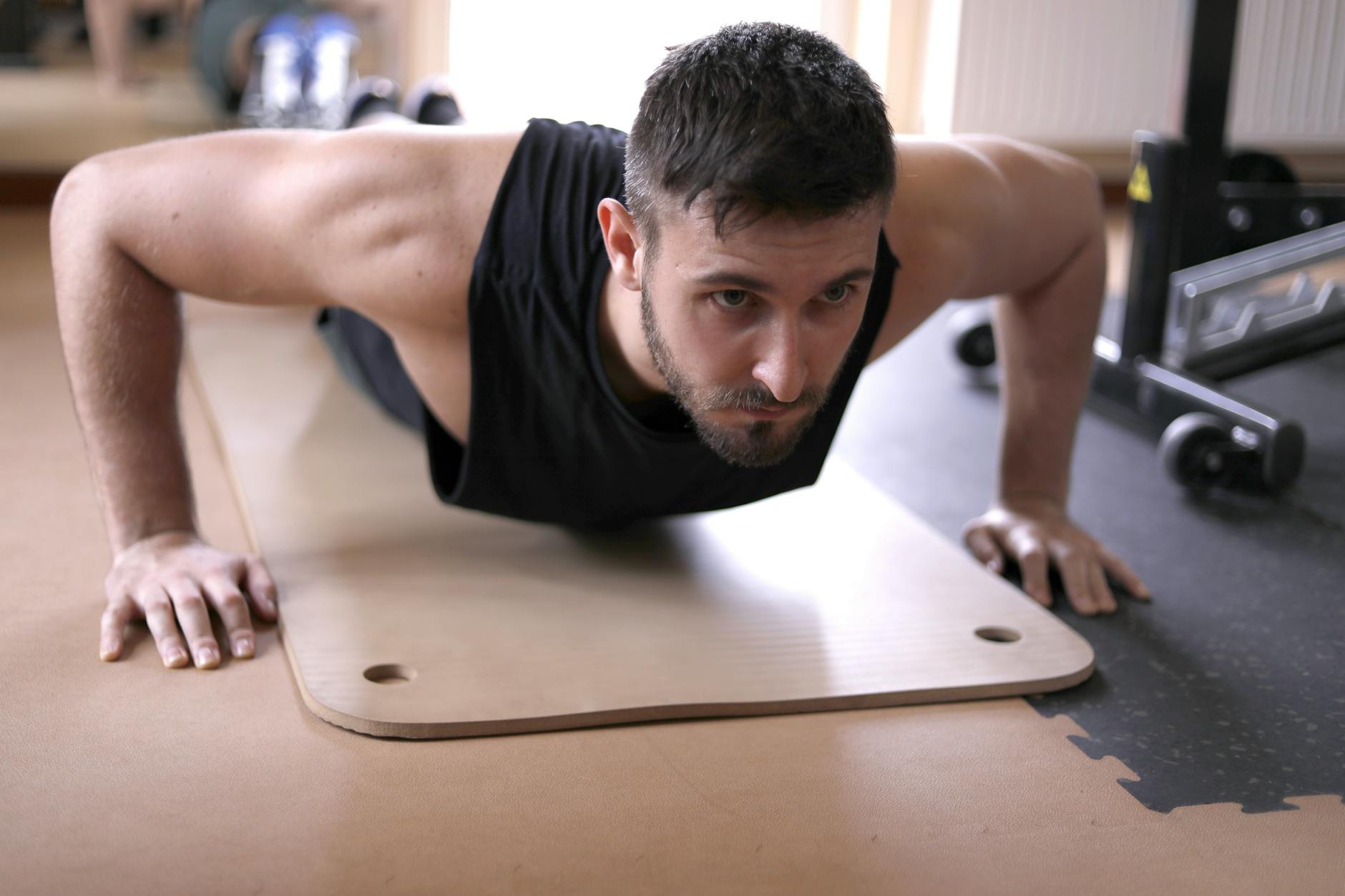
Push-ups, pike push-ups, and tricep dips form the foundation of bodyweight upper body muscle building. These compound movements target multiple muscle groups simultaneously while allowing for progressive difficulty increases.
For those looking to develop comprehensive upper body strength while targeting all major muscle groups, incorporating these exercises into a full body workout plan maximizes efficiency and ensures balanced development across the entire physique.
Lower Body Strengthening
Bodyweight squats, lunges, and single-leg variations provide substantial lower body muscle building stimulus. These exercises target the quadriceps, hamstrings, glutes, and calves through functional movement patterns.
Core and Stabilization
Planks, mountain climbers, and hollow body holds develop core strength essential for overall muscle building success. Core stability enhances performance in all other exercises while contributing to functional strength development.
Advanced Progressive Overload Strategies
Time-Based Progressions
Manipulating exercise tempo and isometric holds creates advanced training stimulus without additional equipment. These time-based progressions increase muscle tension duration and metabolic stress.
Range of Motion Modifications
Adjusting exercise range of motion through elevation changes and depth variations increases difficulty systematically. These modifications allow continued progression as strength increases.
Exercise Variations and Complexities
Progressive exercise complexity ensures continued muscle building stimulus as basic movements become easy. Advanced variations maintain challenge levels necessary for ongoing growth.
Optimal Muscle Building Nutrition at Home
Protein Timing and Distribution
Optimal protein intake for muscle building requires 1.6-2.2 grams per kilogram body weight distributed throughout the day. Home muscle building success depends heavily on adequate protein consumption.
For individuals dealing with inflammation that may impact recovery, following an anti-inflammatory diet approach can optimize nutrient absorption and support muscle building goals while reducing systemic inflammation.
Nutrient Timing for Growth
Strategic nutrient timing around workouts maximizes muscle protein synthesis and recovery. Proper nutrition timing supports the muscle building process initiated through bodyweight training.
Budget-Friendly Equipment Additions
Resistance Band Integration
Resistance bands add variable resistance to bodyweight exercises while maintaining budget-friendly home training. These versatile tools enhance progression options significantly.
Household Item Utilization
Creative use of household items like water jugs, backpacks, and furniture expands exercise possibilities. These readily available items provide additional resistance and variation options.
Measuring Progress and Overcoming Plateaus
Home Assessment Methods
Progress tracking at home requires systematic measurement of strength increases, body composition changes, and performance improvements. Consistent assessment enables program adjustments.
Plateau-Breaking Strategies
Overcoming plateaus requires strategic program modifications including exercise selection changes, volume adjustments, and recovery optimization. These strategies maintain continuous progress.
Recovery and Hormonal Optimization
Sleep and Recovery Protocols
Optimal muscle building requires 7-9 hours of quality sleep nightly for hormone optimization and recovery. Sleep quality directly impacts muscle protein synthesis and growth hormone release.
Implementing evidence-based sleep improvement strategies enhances recovery quality and supports optimal muscle building results from your bodyweight training efforts.
Age-Specific Considerations
Age-related factors require training and nutrition modifications for optimal muscle building results. Older adults may need extended recovery periods and modified progression rates.
Can You Really Build Significant Muscle Without Weights?
Yes, significant muscle building is possible through bodyweight training when progressive overload principles are properly applied. Research demonstrates comparable hypertrophy results between bodyweight and weight training.
How Long Does It Take to See Muscle Building Results at Home?
Visible muscle building results typically appear within 4-6 weeks of consistent bodyweight training. Strength improvements often occur within 2-3 weeks of program initiation.
What’s the Biggest Mistake People Make with Home Muscle Building?
The biggest mistake is failing to progressively increase exercise difficulty over time. Muscle building requires continuous challenge increases through systematic progression.
How Often Should You Train for Optimal Muscle Building at Home?
Optimal muscle building occurs with 3-4 training sessions per week allowing adequate recovery between sessions. This frequency balances training stimulus with recovery requirements.
Can Resistance Bands Replace Weight Training for Muscle Building?
Resistance bands can effectively replace weight training for muscle building when combined with bodyweight exercises. The variable resistance provided matches strength curves effectively.
What Role Does Nutrition Play in Home Muscle Building?
Nutrition accounts for approximately 60-70% of muscle building success regardless of training location. Adequate protein intake and caloric balance are essential for growth.
How Do You Know When to Progress to Harder Exercise Variations?
Progress to harder variations when you can complete 15-20 repetitions of the current exercise with proper form. This repetition threshold indicates readiness for increased difficulty.
Is It Possible to Overtrain with Bodyweight Exercises?
Yes, overtraining is possible with bodyweight exercises when volume exceeds recovery capacity. Symptoms include decreased performance, persistent fatigue, and increased injury risk.